
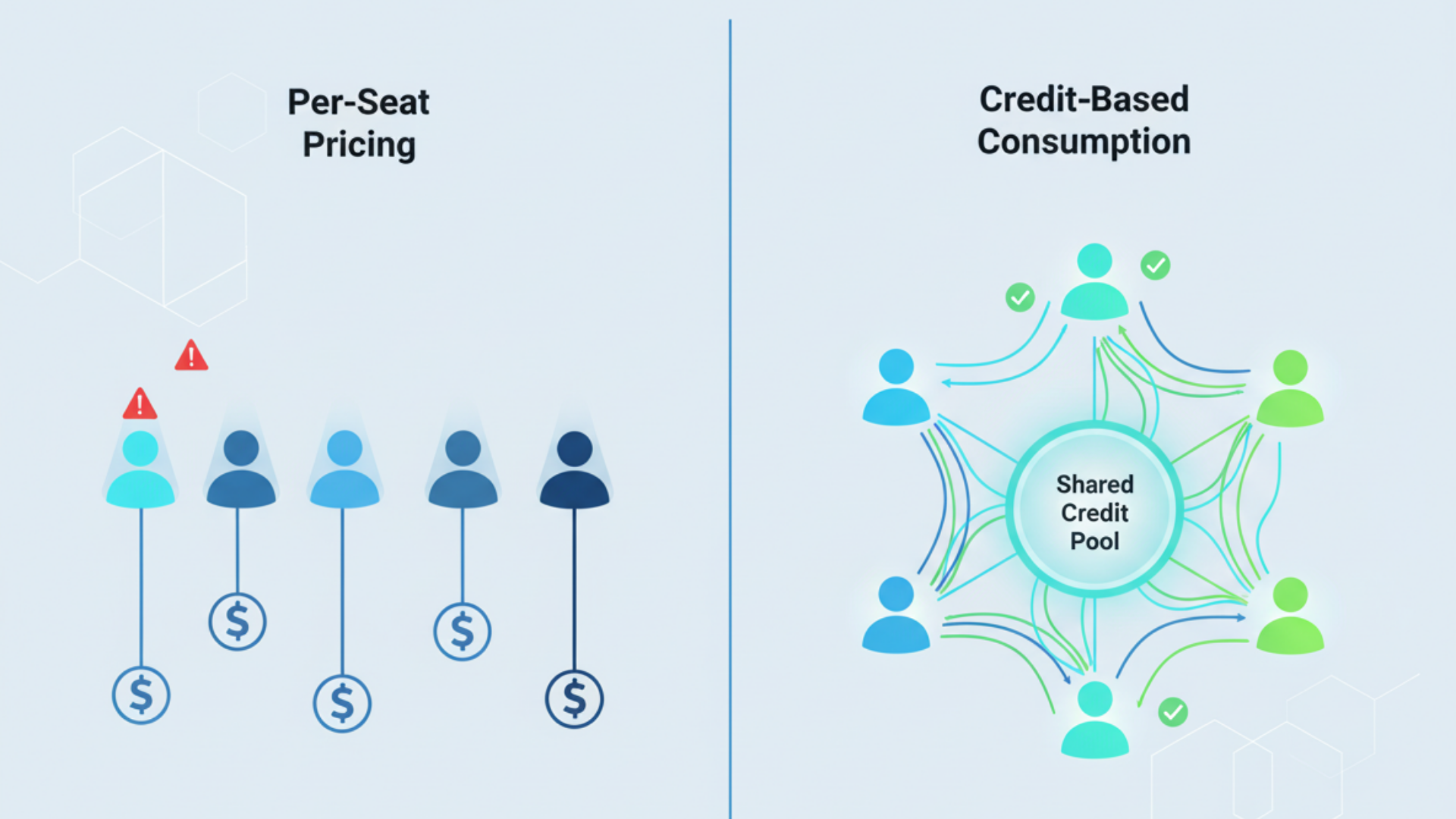
Traditional AI tools charge per user monthly, regardless of actual usage. Your creative director who uses ChatGPT 50 times daily pays the same as your part-time coordinator who checks it twice weekly.
This is the per-seat penalty, a pricing model that creates inefficiencies, restricts access, and misaligns costs with value delivered.
Here’s why usage-based pricing is transforming how smart teams approach AI investments.
Understanding the Per-Seat Penalty
Most AI platforms follow the traditional SaaS model:
- Fixed monthly fee per user account
- Unlimited usage within plan limits
- Same cost regardless of consumption patterns
- Payment required whether tools are used actively or sit idle
Examples from Current Market:
- ChatGPT Plus: $20 per user monthly
- Claude Pro: $20 per user monthly
- ChatGPT Teams: $25 per user monthly
- Various enterprise AI tools: $30-100+ per user monthly
The Misalignment Problem
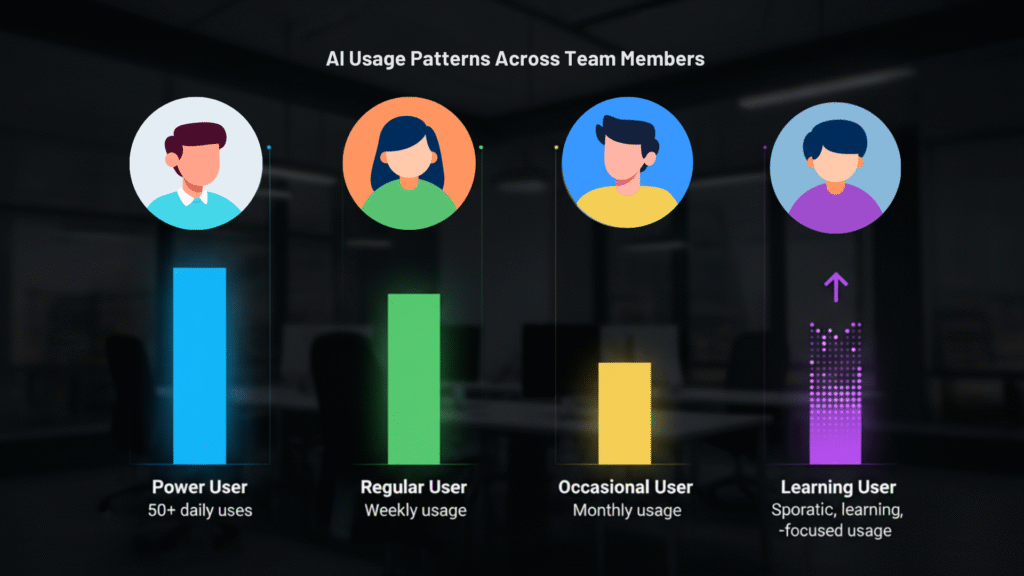
Per-seat pricing assumes uniform usage across team members, but workplace reality shows dramatic variation:
Typical Usage Patterns in Creative Teams:
- Power Users: Senior creatives using AI intensively for ideation, content creation, and iteration
- Regular Users: Mid-level team members incorporating AI into specific workflow steps
- Occasional Users: Junior staff, part-time employees, or specialists needing periodic AI assistance
- Learning Users: New team members exploring AI capabilities and developing skills
The Penalty: Everyone pays the same amount despite vastly different value consumption.
Credit-Based Pricing: The Alternative Model
Credit-based AI platforms charge for actual consumption:
- Purchase credit packages for AI interactions
- Different AI models consume different credit amounts
- Costs align directly with usage patterns
- Team members share from organizational credit pools
Credit Consumption Logic:
- Simple text generation: Lower credit cost
- Complex analysis or research: Moderate credit cost
- Advanced AI models or specialized tasks: Higher credit cost
- Image generation or multimedia: Variable credit costs based on complexity
Direct Cost Comparison Scenarios
Scenario 1: Mixed-Usage Marketing Team (15 People)
Team Composition:
- 3 Senior marketers (heavy daily usage)
- 5 Content creators (regular usage)
- 4 Account managers (moderate usage)
- 3 Junior staff/interns (light, learning-focused usage)
Per-Seat Pricing Reality: All 15 team members require individual subscriptions to access AI capabilities, regardless of usage frequency or intensity.
Credit-Based Pricing Reality: Team shares credit pool, with consumption naturally aligning to individual usage patterns and role requirements.
Access Implications:
- Per-seat: Often restricts access to senior staff due to cost concerns
- Credit-based: Enables democratic access with costs scaling to actual usage
Scenario 2: Seasonal Business Patterns
E-commerce Agency Example:
- During holiday season preparation (3 months)
- Entire team uses AI intensively.
- During off-season (9 months), minimal AI usage is required
Per-Seat Challenge: Fixed monthly costs continue regardless of seasonal demand fluctuations, creating budget inefficiency during low-usage periods.
Credit-Based Advantage: Credit consumption naturally fluctuates with business demand, aligning costs with revenue-generating periods.
Scenario 3: Project-Based Team Scaling
Consulting Firm Pattern:
Large client projects require temporary team expansion with contractors and specialized experts needing AI access.
Per-Seat Limitation: Adding temporary team members requires new subscriptions, often with monthly minimums and setup overhead.
Credit-Based Flexibility: Temporary team members access shared credit pools without subscription setup, enabling efficient project scaling.

The Access Democracy Problem
Per-Seat Creates Artificial Barriers
Research from software adoption studies shows that per-seat pricing often leads to access restrictions based on cost rather than need.
Common Per-Seat Access Patterns:
- Senior staff get priority access
- Junior team members excluded due to budget constraints
- Part-time employees often omitted from AI access
- Contractors and temporary staff face setup barriers
Business Impact: Teams miss opportunities for skill development, innovation, and efficiency gains from broader AI adoption.
Credit-Based Enables Inclusive Access
Usage-based systems remove artificial access barriers:
- All team members can access AI capabilities
- Costs scale naturally with individual productivity and role requirements
- Learning and experimentation become low-risk activities
- Team skill development accelerates across all levels
Industry Trends Toward Usage-Based Pricing
Software Industry Evolution
- Historical Pattern: Early SaaS adopted per-seat pricing from traditional software licensing models.
- Current Trend: Leading software companies increasingly offer usage-based alternatives as customer preferences shift toward consumption-aligned pricing.
- Market Examples:
- Cloud computing services (AWS, Google Cloud, Azure) primarily usage-based
- Communication platforms offering both per-seat and consumption options
- Analytics and data tools moving toward query-based or data-volume pricing
Why Companies Prefer Usage-Based Models
- Financial Predictability: Costs align with business activity levels and revenue generation periods.
- Scaling Efficiency: Growth doesn’t automatically trigger linear cost increases, enabling more profitable expansion.
- Budget Optimization: Resources allocated based on actual value consumption rather than potential usage estimates.
- Access Flexibility: Easier to provide tools to entire organizations without per-head cost penalties.
Qolaba’s Credit-Based Approach
Transparent Usage-Based Pricing
Qolaba‘s credit system aligns costs directly with AI consumption:
- Clear Credit Costs: Transparent pricing for different AI interactions and model types
- Flexible Credit Packages: Organizations purchase credits based on anticipated usage patterns
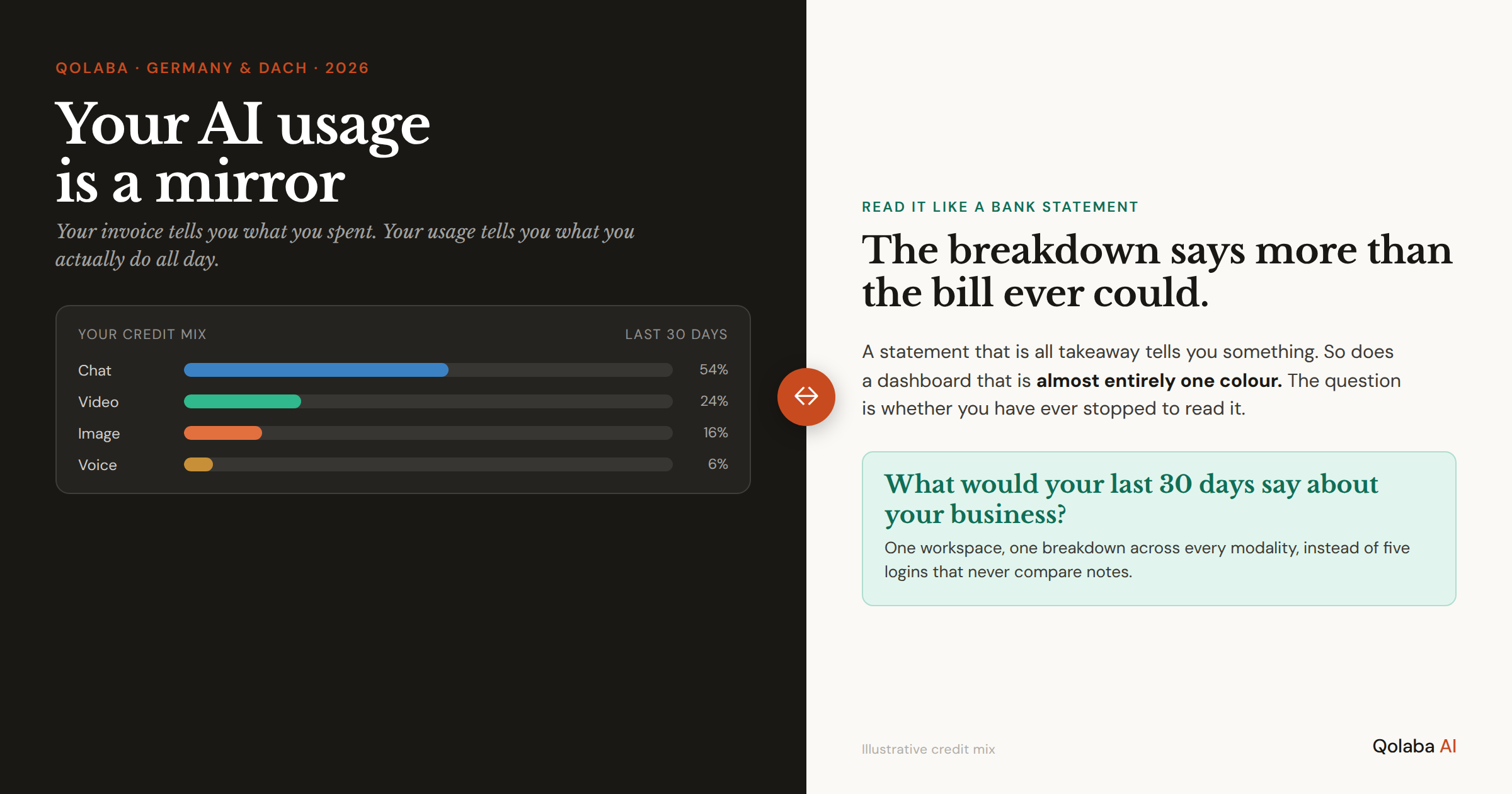
- Real-Time Tracking: Teams monitor credit consumption and optimize usage efficiency
- Democratic Access: All team members access platform capabilities regardless of usage frequency
Smart Credit Optimization
- Intelligent Model Routing: Automatically selects cost-effective AI models for specific tasks without sacrificing quality.
- Usage Analytics: Teams identify optimization opportunities and usage patterns for better budget planning.
- Collaborative Credit Management: Shared credit pools enable natural usage distribution across team members.
Enterprise Credit Solutions
- Volume Pricing: Large credit packages offer better per-credit economics for high-usage organizations.
- Department Allocation: Credit distribution across different teams with usage tracking and reporting.
- Predictable Budgeting: Monthly credit subscriptions provide budget predictability while maintaining usage flexibility.
Making the Transition Decision
Evaluating your Current AI Costs with Assessment Questions:
- How many team members have AI access vs. how many could benefit?
- What percentage of purchased AI subscriptions get used actively?
- Do usage patterns vary significantly across team members?
- Are project demands seasonal or variable?
- Do you restrict AI access due to per-seat cost concerns?
Calculating Potential Improvements
- Usage Pattern Analysis: Track actual AI consumption across team members for one month to understand real usage distributions and identify per-seat pricing inefficiencies.
- Access Expansion Opportunities: Consider how many additional team members would benefit from AI access if cost barriers were removed.
- Workflow Integration Potential: Evaluate whether more flexible pricing would enable better AI integration into existing workflows and processes.
The Strategic Advantage
Competitive Benefits of Usage-Based AI Pricing
- Operational Flexibility: Costs scale naturally with business demands and growth patterns.
- Team Empowerment: Democratic AI access enables broader skill development and innovation.
- Budget Efficiency: Resources align with actual value delivery rather than subscription commitments.
- Scaling Economics: Growth becomes more profitable as AI costs remain proportional to usage.
Making the Switch
The shift from per-seat to credit-based AI pricing represents more than cost optimization—it’s strategic alignment of technology investment with business value creation.
Key Transition Benefits:
- Eliminate artificial access barriers
- Align costs with actual consumption patterns
- Enable flexible scaling for project demands
- Improve budget predictability and optimization
Stop paying per-seat penalties. Start investing in usage-based value with Qolaba today!.