
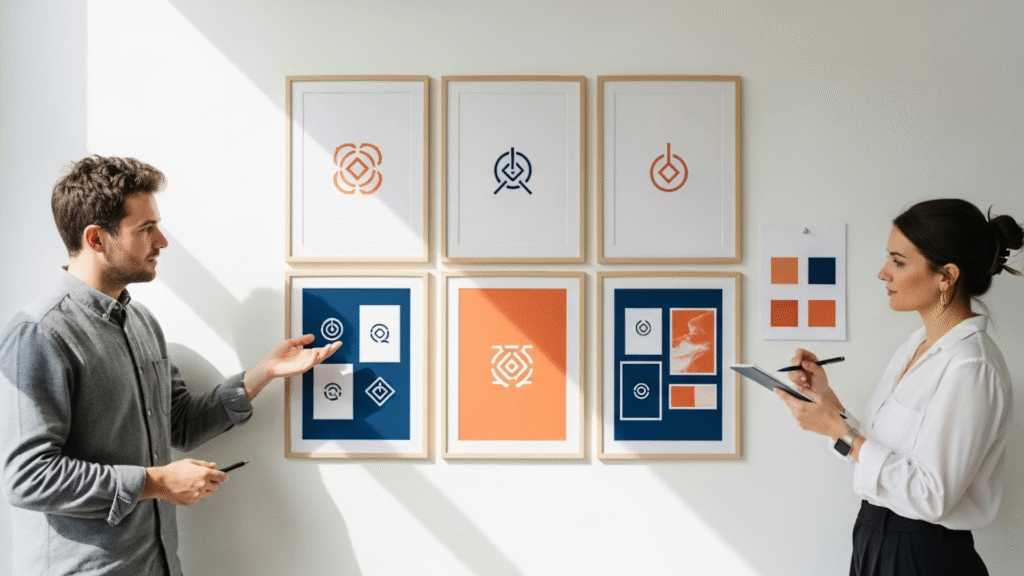
A startup founder needs a logo by tomorrow’s investor pitch. An agency must create five brand concepts for a client presentation. A marketing team wants to refresh their visual identity without breaking the budget.
Traditional branding processes take weeks and cost thousands. But what if you could generate professional brand concepts in hours, iterate instantly based on feedback, and develop comprehensive style guides that maintain consistency across all touchpoints?
This guide reveals how to craft AI prompts that transform brand strategy into visual identity—from initial logo concepts to complete style systems.
The Challenge of Brand Identity Prompting
Brand identity isn’t just about pretty pictures. It’s about translating company values, market positioning, and emotional connections into visual language. Most AI prompting fails here because it focuses on aesthetics without strategy.
Common brand prompting pitfalls:
- Generic Descriptions: “Modern tech company logo” produces clichéd results
- Missing Brand Context: Visuals disconnected from brand personality
- Inconsistent Elements: Each asset feels different, lacking cohesion
- No Scalability: Works as a logo but falls apart in applications
Effective brand prompting requires systematic thinking about visual storytelling.
Strategic Foundation for Brand Prompts
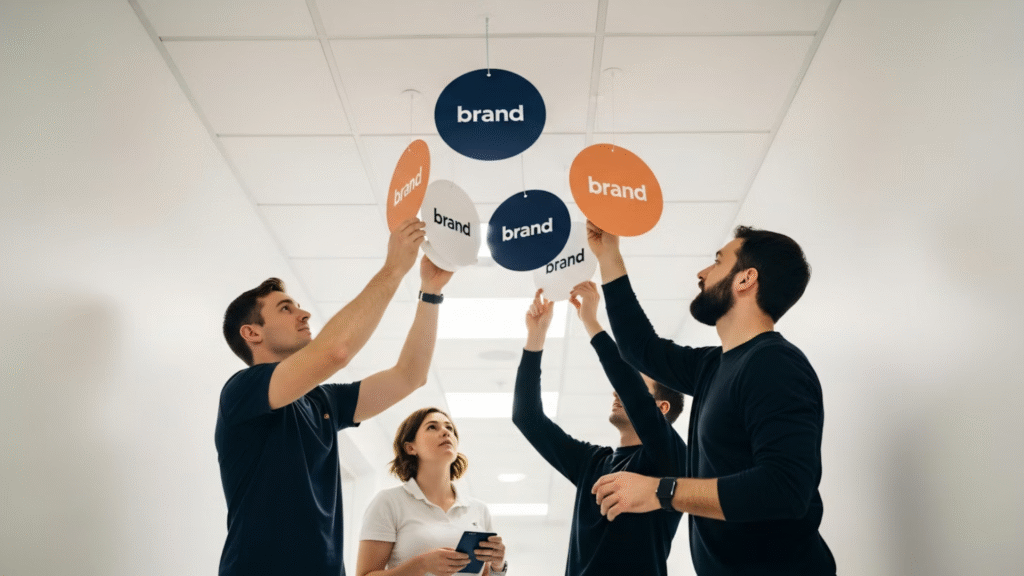
Define Your Brand DNA First
Before any visual prompting, clarify:
- Brand Personality Traits Instead of “professional,” specify “authoritative yet approachable, like a trusted advisor who doesn’t take themselves too seriously.”
- Target Audience Visualization “Design-conscious millennials who value sustainability and authenticity” generates different visuals than “enterprise executives prioritizing security and stability.”
- Competitive Positioning “More playful than IBM, more sophisticated than Mailchimp, similar energy to Slack but warmer.”
- Emotional Objectives What should people feel? Confident? Inspired? Safe? Excited? This drives every visual decision.
The Brand Prompt Formula
Structure your prompts using this framework:
“[Brand Type] logo for [Company Name], conveying [Core Values] through [Visual Style], targeting [Audience], feeling [Emotional Tone], using [Color Direction], [Complexity Level] design suitable for [Applications]”
Example Applied: “Fintech startup logo for PayFlow, conveying trust and innovation through geometric minimalism, targeting young professionals, feeling approachable yet secure, using deep blue and bright accent colors, simple design suitable for app icons and business cards”
Logo Concept Generation
Systematic Logo Exploration
Generate variations systematically:
- Wordmark Variations “PayFlow wordmark logo, custom typography that feels technological but human, subtle modification to letters suggesting movement or connection, single color design, scalable from favicon to billboard”
- Symbol Development “Abstract symbol representing secure money flow, geometric construction using golden ratio, works at 16px and billboard size, memorable single-color silhouette, avoiding cliché money symbols”
- Combination Marks “PayFlow logo combining custom wordmark with abstract symbol, symbol can work independently, balanced proportions following rule of thirds, clear spacing relationships, horizontal and vertical lockup versions”
Style Refinement Prompts
Once you have base concepts, refine with specific style directions:
- Modernization: “Take existing concept and simplify to essential elements, increase white space, flatten any gradients, ensure perfect geometric alignment”
- Humanization: “Add subtle organic curves to geometric design, introduce slight asymmetry for warmth, soften sharp corners, maintain professional appearance”
- Premiumization: “Refine with luxury aesthetics, increase letter spacing, add subtle sophistication through proportion adjustments, elegant without being pretentious”
Expanding to Full Visual Systems

Color Palette Development
“Create comprehensive color system for PayFlow brand: primary deep blue (#specific hex), energetic accent color that complements without clashing, two supporting neutral tones, accessibility-compliant contrast ratios, shown in various combinations with usage guidelines”
Typography Hierarchy
“Complete typography system for PayFlow: primary heading font that pairs with logo, readable body font for long text, monospace font for data display, showing all combinations in actual use cases, maintaining brand personality across all weights”
Visual Element Library
“Supporting graphic elements for PayFlow brand: abstract patterns derived from logo geometry, icon style guidelines showing 5 example icons, photography style direction with 3 example images, illustration style if applicable, all maintaining consistent visual language”
Creating Comprehensive Style Guides
Component Documentation Prompts
- Logo Usage Guidelines “Show PayFlow logo in various contexts: minimum sizes, clear space requirements, acceptable and unacceptable uses, color variations for different backgrounds, co-branding examples, common mistakes to avoid”
- Application Examples “PayFlow brand identity applied to: business card design, mobile app interface, website header, email signature, social media templates, presentation slides, maintaining consistency while showing flexibility”
Brand Voice Integration
Visual identity extends beyond graphics:
“Written content guidelines matching PayFlow visual identity: tone of voice examples (professional but conversational), messaging framework, headline styles, call-to-action patterns, showing how verbal and visual identity work together”
Practical Implementation Strategies

Rapid Iteration Method
Start with quantity, refine to quality:
- Generate 20 rough concepts quickly
- Select 5 promising directions
- Refine each with specific adjustments
- Test at various sizes and contexts
- Polish final selection to perfection
Stakeholder Presentation Prompts
“Create brand presentation board showing PayFlow identity: logo on various backgrounds, color palette with ratios, typography in use, application mockups on real devices, before/after comparison if rebrand, competitive context visualization”
Production-Ready Assets
“Generate PayFlow logo in production formats: vector-clean design suitable for conversion, RGB and CMYK color versions, black and white variants, reversed versions for dark backgrounds, special use cases like embroidery or signage”
Common Brand Scenarios
- Startup Launch Focus on flexibility and growth: “Brand identity that can evolve with company, professional enough for enterprise clients but approachable for small businesses, working across digital and physical touchpoints”
- Rebrand Project Balance heritage with evolution: “Modernized identity maintaining recognition from existing brand, evolutionary not revolutionary change, showing clear improvement while respecting brand equity”
- Sub-Brand Creation Maintain Parent Brand connection: “Sub-brand identity clearly related to parent brand but with distinct personality, shared visual DNA with unique elements, systematic relationship showing hierarchy”
Ready to accelerate your brand development process? Platforms like Qolaba enable teams to collaborate on brand identity creation in real-time, storing successful prompts as reusable templates and maintaining brand consistency across all generated assets. With integrated workspaces, your team can iterate on concepts together, build comprehensive style guides, and ensure every piece of content aligns with your brand vision—all while tracking which approaches resonate most with your audience.