

In today’s rapidly evolving business landscape, AI collaboration has become the cornerstone of high-performing teams. As organizations increasingly adopt artificial intelligence to enhance productivity and drive innovation, the need for optimally configured AI workspaces has never been more critical. The difference between AI success and failure often lies not in the technology itself, but in how teams are structured and empowered to leverage these powerful tools effectively.
The Challenge: Why Traditional Team Structures Fall Short
Traditional team structures, designed for pre-AI workflows, often create bottlenecks when organizations attempt to integrate artificial intelligence. Common challenges include siloed expertise where AI tools require diverse skill sets, access barriers with complex platforms preventing non-technical participation, inconsistent workflows across AI-powered projects, resource conflicts from per-seat licensing models, and knowledge gaps in sharing AI insights effectively.
To overcome these challenges, organizations must reimagine their team collaboration strategies, creating configurations that maximize AI’s potential while maintaining human creativity and strategic thinking.
What Makes an Optimal AI Collaboration Workspace?

An effective AI collaboration workspace goes beyond simply providing access to AI tools. It creates an environment where diverse team members can seamlessly integrate artificial intelligence into their workflows. Key characteristics include unified platform access to multiple AI capabilities within a single workspace, role-based customization ensuring everyone can contribute effectively, real-time collaboration for dynamic co-creation, flexible resource allocation through usage-based pricing, and centralized knowledge management for continuous learning.
Optimal Team Configurations for AI Success
Research and real-world implementations reveal several highly effective team configurations for AI collaboration:
1. The Cross-Functional AI Pod
This configuration brings together 4-6 members from different disciplines—marketing, sales, product, design, and data analysis—who work collaboratively on AI-powered projects. Each member contributes domain expertise while learning to leverage AI tools effectively.
Benefits:
- Diverse perspectives enhance AI prompt quality and output relevance
- Rapid knowledge transfer across disciplines
- Reduced dependency on technical specialists
- Faster project completion through parallel workflows
2. The Hub-and-Spoke Model
A central AI expertise team (the hub) supports multiple specialized teams (spokes) across the organization. The hub provides training, best practices, and advanced AI capabilities, while spokes focus on domain-specific applications.
Benefits:
- Scalable AI adoption across large organizations
- Consistent quality standards and governance
- Efficient resource utilization
- Specialized expertise where needed most
3. The Agile AI Squad
Small, autonomous teams (3-5 members) with mixed technical and business skills work on specific AI initiatives with short iteration cycles. This configuration emphasizes rapid experimentation and learning.
Benefits:
- Fast adaptation to changing requirements
- High team autonomy and ownership
- Continuous improvement through rapid feedback loops
- Innovation through experimentation
4. The Collaborative Network
A flexible, project-based structure where team members from across the organization form temporary collaborations around specific AI initiatives, leveraging shared workspace tools and resources.
Benefits:
- Maximum flexibility and resource optimization
- Cross-pollination of ideas and expertise
- Reduced organizational silos
- Dynamic scaling based on project needs
Essential Elements of AI Workspace Setup
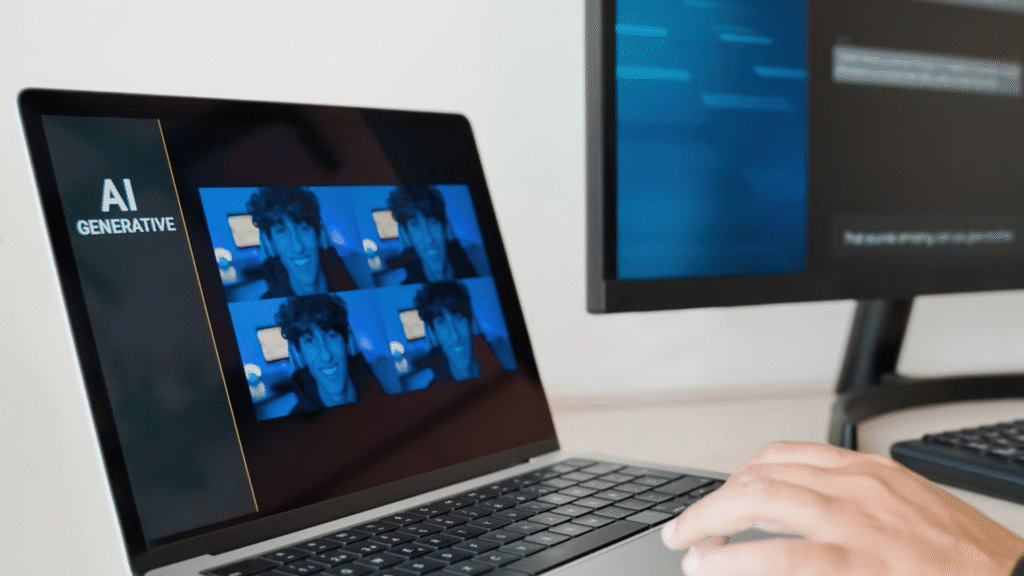
Creating an optimal AI workspace setup requires careful attention to several critical elements:
Technology Infrastructure
- Multi-Modal AI Access: Teams need seamless access to various AI capabilities—text generation, image creation, video editing, and speech processing—all within a unified platform.
- Collaborative Tools: Real-time editing, commenting, version control, and project management capabilities ensure smooth team coordination.
- Integration Capabilities: The workspace should integrate with existing tools and workflows, minimizing disruption and maximizing adoption.
Governance and Security
- Access Controls: Role-based permissions ensure team members have appropriate access levels while maintaining security and compliance.
- Data Privacy: Enterprise-grade security protects sensitive information while enabling collaboration.
- Usage Monitoring: Analytics and reporting capabilities help teams track AI usage, measure ROI, and optimize workflows.
Training and Support
- Onboarding Programs: Structured training helps team members quickly become proficient with AI tools and collaborative processes.
- Best Practice Libraries: Centralized repositories of successful prompts, workflows, and case studies accelerate learning and adoption.
- Ongoing Support: Regular training updates and support resources ensure teams stay current with evolving AI capabilities.
How Qolaba Enables Optimal AI Team Configurations
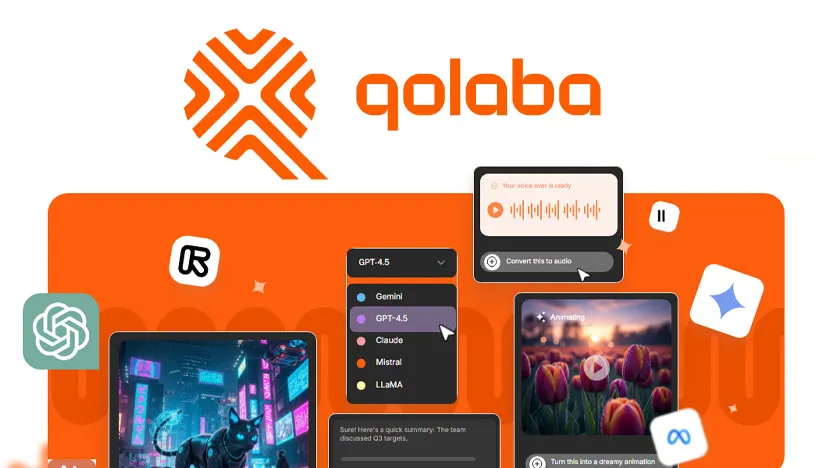
Qolaba’s AI Studio platform specifically supports optimal AI collaboration configurations with powerful features.
- The platform provides comprehensive multi-modal AI access to over 60 models encompassing text, audio, video, and design capabilities within one collaborative workspace.
- Flexible team management supports various configurations with workflows adapting to organizational structures.
- Credit-based pricing eliminates per-seat constraints, enabling flexible team scaling without budget penalties.
- Custom AI agents allow teams to create specialized workflows tailored to specific needs, enhancing productivity and consistency.
- Enterprise security features ensure secure collaboration while maintaining governance requirements.
Best Practices for Implementation
To maximize AI collaboration workspace effectiveness, organizations should start with clear objectives, defining specific goals before implementing new configurations. Begin with pilot teams to test configurations with motivated groups before scaling. Invest in comprehensive training ensuring all members can contribute effectively.
Foster a learning culture encouraging experimentation and knowledge sharing. Measure and iterate by tracking productivity, collaboration frequency, and project outcomes. Maintain human-AI balance, using AI to augment rather than replace human creativity and strategic thinking.
The Future of AI-Powered Team Collaboration
Organizations that thrive in the AI era will successfully configure teams to harness artificial intelligence’s full potential. Optimal team configurations for AI collaboration combine human creativity with AI capabilities to produce extraordinary results.
Platforms like Qolaba’s AI Studio provide the foundation for high-performing configurations, offering tools, flexibility, and support teams need for effective collaboration. By implementing thoughtful AI workspace setups and optimal team structures, organizations unlock unprecedented levels of productivity, innovation, and competitive advantage in tomorrow’s AI-driven marketplace.